
Kalamazoo, MI · Garage Door Service
Why Kalamazoo Garage Doors Let in Cold Air and Drafts
Most Kalamazoo garages were built between 1938 and 1993, and worn seals on these older doors let cold air and drafts in during harsh Michigan winters.
- Repairs & new doors
- Springs & openers
- Serving 7 nearby communities
What Local Conditions Do
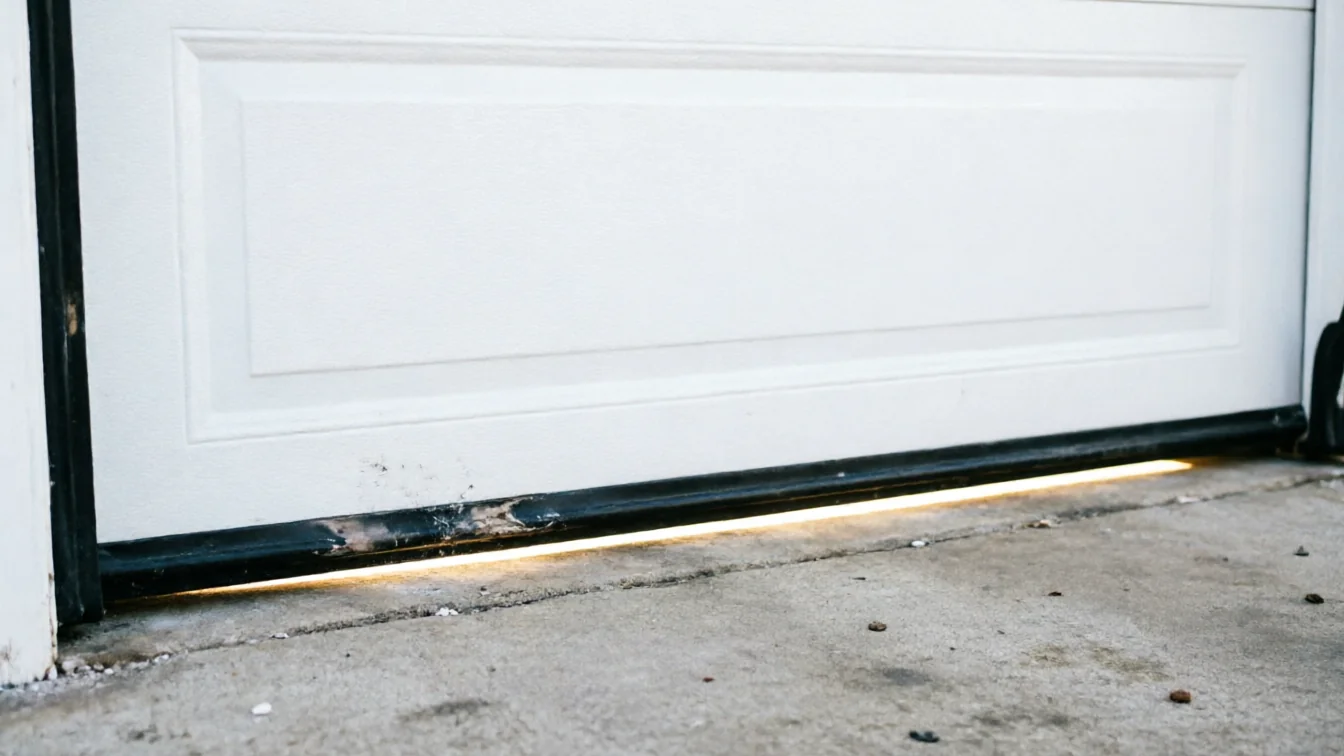
Kalamazoo sits in a climate band the federal data marks as severely cold, and that matters more for a garage door than most homeowners expect. The bottom panel seal and the side weatherstripping are rubber or vinyl, and that material hardens and cracks through repeated freeze-thaw cycles every winter. It's not a one-time failure - it's slow, and it happens on a schedule tied to how many hard freezes the door has been through.
That schedule lines up badly with the age of the housing stock here. Across the 25 named areas in this service area - Westwood, Eastwood, Oakland/Winchell, South Westnedge, and the rest - most houses went up between 1938 and 1993, with the typical build year sitting around 1969. A door and frame installed anywhere near that era, or even a replacement door hung on original framing from that era, has seen decades of Michigan winters work on whatever seal is currently in place. The gap you feel at the bottom corners on a January morning isn't a mystery. It's a vinyl strip that's done its job for longer than it was built to.
What Most People Get Wrong
The usual assumption is that drafts come from under the door only, so people focus on the bottom seal and stop there. On a lot of the older doors common in this area's 1960s and 70s stock, the bigger leak is along the sides and top, where the stop molding has pulled away from the jamb or warped enough that the seal no longer makes contact. You can replace the bottom astragal and still feel cold air coming in at waist height.
The other mistake is treating a draft as an opener problem. People hear cold air and assume the opener or the automatic reverse sensor is somehow letting the door sit open a crack. It almost never is. The opener closes the door to the same travel limit every time; the gap is in the material around the door, not in how far it travels. Checking the opener first wastes a service call that should have started with the weatherstripping and the stop molding instead.
What Is Going On
Steel sections from the 1960s and 70s - still common across this area's older housing - were built without the thermal break that newer insulated doors use, so the panel itself conducts cold straight through. Add a seal that's shrunk or cracked from years of severe winters, and you get both a conduction problem and an air-gap problem stacked on top of each other. Wood jambs from that same era move with humidity and temperature, which shifts the reveal the door seals against and leaves the weatherstripping fighting a moving target.
With 23,763 owner-occupied houses across the service area, a large share of garages are hitting this same failure point at roughly the same time, because they were built in the same narrow window. It isn't one bad batch of material or one unlucky house - it's the age of the housing stock catching up with the material science of fifty or sixty years ago, all at once, every time the temperature drops hard.
Leaving It Alone
Replacing bottom seal and side weatherstripping is cheap and often solves most of the draft. We won't tell you to replace a whole door just because it's cold in the garage - if the panels are straight and the track is sound, new seals usually fix it.
Where we draw the line: if the steel panels themselves are rusted through, bowed, or dented along the bottom section, no seal will hold a tight line against warped metal, and you're better off replacing the door than re-sealing it every other winter. We also won't promise a seal fix will stop condensation on an uninsulated steel door - that's a different problem with a different fix. If your garage is a workshop or heated space, that's worth a separate conversation before you spend money on weatherstripping alone.
Frequently asked questions
Why does my garage door let in cold air even with a new bottom seal?
On older doors common in this area, the leak often isn't the bottom seal at all - it's the side and top weatherstripping, where the stop molding has warped or pulled away from the jamb. Replacing just the bottom astragal won't fix a gap higher up. Check the full perimeter, not just the floor line.
Is it worth replacing seals on a garage door from the 1960s or 70s?
Usually yes, if the panels are straight and the track runs true. New weatherstripping is a fraction of the cost of a door and solves most draft complaints on doors from that era. It won't add a thermal break to an old steel panel, so some cold transfer through the metal itself will remain.
How often do garage door seals need replacing in Kalamazoo's climate?
There's no fixed interval in the data we work from, but severe cold cycles the material through repeated freeze-thaw stress every winter, and vinyl seals harden and crack faster here than in a milder climate. Once you see daylight at the corners or feel a draft at floor level, it's time to look at it.
Related garage door services in Kalamazoo
More garage door guides
Book garage door service in Kalamazoo
Call now or request a quote - tell us what the door is doing and where you are.