
Kalamazoo, MI · Garage Door Service
Garage Door Work for Eastwood's 1950s Housing Stock
Eastwood homes mostly date to the mid-1950s, older than Kalamazoo's citywide median. We work on the extension-spring setups and narrow tracks that come with that era.
- Repairs & new doors
- Springs & openers
- Serving 7 nearby communities
Common Jobs Here
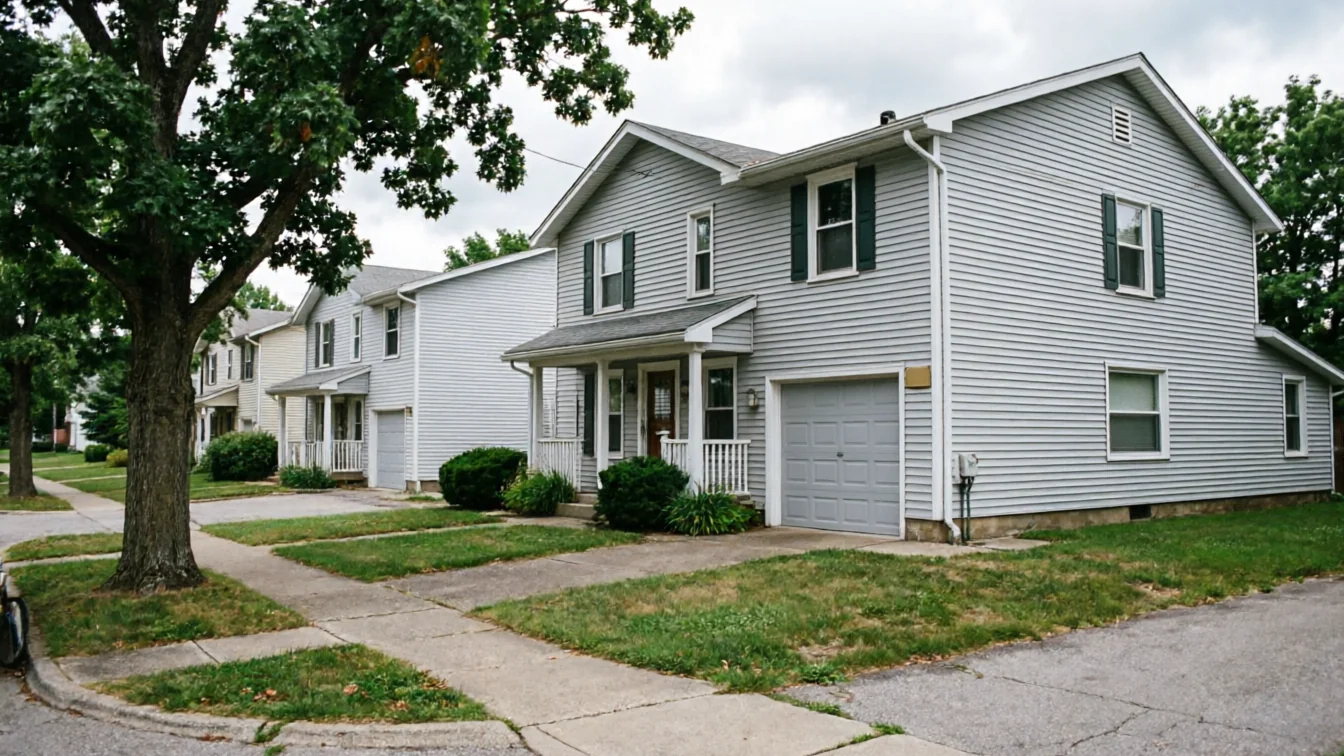
Eastwood sits about 3 miles northeast of Kalamazoo, and the houses here skew older than the city average. Citywide, the median build year across the service area runs to 1969, but Eastwood's own housing clusters closer to 1955. That ten-to-fifteen-year gap matters more than it sounds. Houses from the mid-1950s were usually built with single-car or narrow double openings, and a lot of them still run the original extension-spring setup bolted to the back wall rather than a torsion bar over the header. The calls we get from this part of town lean toward worn extension springs, frayed lift cables on pulley systems, and openers that were added decades after the house was built and never quite matched to the door's actual weight. We also see a fair number of track realignment jobs, since older framing has settled more than newer construction and the tracks were rarely over-engineered to begin with. With 2,879 households in Eastwood, there's a real concentration of this specific hardware era, which is different from what you'd find in a subdivision built in the 1980s.
What That Means for Doors
A door built for a 1955 opening isn't a universal size the way a lot of modern stock doors are. If you're replacing a panel or the whole door, measuring matters more here than in newer neighborhoods, because the rough opening may not match catalog standard widths. Extension springs also behave differently than torsion springs when they fail - they tend to let go suddenly rather than giving warning signs, and a broken one can let the door drop fast if the safety cables aren't in place or have degraded. On openers, a lot of Eastwood garages have a unit that was retrofitted onto original hardware, which means the opener's force settings were often never adjusted for the actual door weight. That shows up as doors that reverse for no reason, or openers straining and burning out early. Given the climate band here runs cold and severe, winter is also when old lift cables and rollers tend to show the wear that's been building all year - cold makes brittle metal brittle faster.
The Houses Here
Eastwood's median household income sits at $50,054, noticeably below the broader service-area median of $70,051, and that tends to track with how often hardware gets replaced versus repaired here. We see more patched-up extension spring systems and fewer early torsion conversions than in newer or higher-income pockets of the coverage area. That's not a knock on the neighborhood - it's just what houses built around 1955 and maintained on a budget tend to look like thirty, forty, fifty years on. A lot of garages here were also one-car originally and had a second bay added later, which means mismatched hardware between the two doors is common: one side torsion, one side extension, different ages on each. Anyone doing work on a door in Eastwood should expect some amount of non-standard sizing or legacy parts rather than assuming a drop-in replacement will fit clean.
What We Will Not Take On
We don't carry stock for obsolete opener models from defunct manufacturers, and on a house this old you sometimes find one. If the opener is a brand that stopped making parts years ago, replacement is usually faster and cheaper than trying to source a part that may not exist anymore - we'll tell you that straight rather than charging for a search. We also won't recommend patching a badly rusted or bent track just to save the door for another season if the frame itself has shifted; at that point you're paying twice. And because we travel out from Kalamazoo rather than keeping a crew stationed in Eastwood, we can't promise same-day response - we'll give you a real window when you call, not a guess.
Frequently asked questions
Why does my opener keep reversing for no reason on an older Eastwood garage?
On houses from the 1950s, openers were often added years after the door was installed and never had their force settings matched to the door's actual weight. That mismatch causes random reversing. It's usually a quick adjustment, but if the springs have also weakened, the opener may be straining to compensate, which is worth checking at the same time.
Is it worth fixing an extension spring or should I switch to torsion?
Depends on the opening and the frame. A torsion conversion can work well but needs enough headroom and a solid header, which not every 1950s garage has. We'll look at your specific setup before recommending one over the other rather than defaulting to a conversion.
Will a standard replacement door fit my Eastwood garage opening?
Not always. Houses built around 1955 weren't always framed to today's standard door widths, so we measure the actual rough opening before ordering anything. Some older openings need a custom or near-custom size rather than an off-the-shelf door.
Garage door services in Eastwood
Every service our crew runs in Eastwood, MI.
Book garage door service in Kalamazoo
Call now or request a quote - tell us what the door is doing and where you are.