
Kalamazoo, MI · Garage Door Service
Spring Repair for Eastwood's 1950s Garage Doors
Eastwood homes median at $50,054 income, built around 1955 - here's where torsion spring repair beats replacement and what the 1-inch shaft doors around here actually need.
- Repairs & new doors
- Springs & openers
- Serving 7 nearby communities
Time on the Job
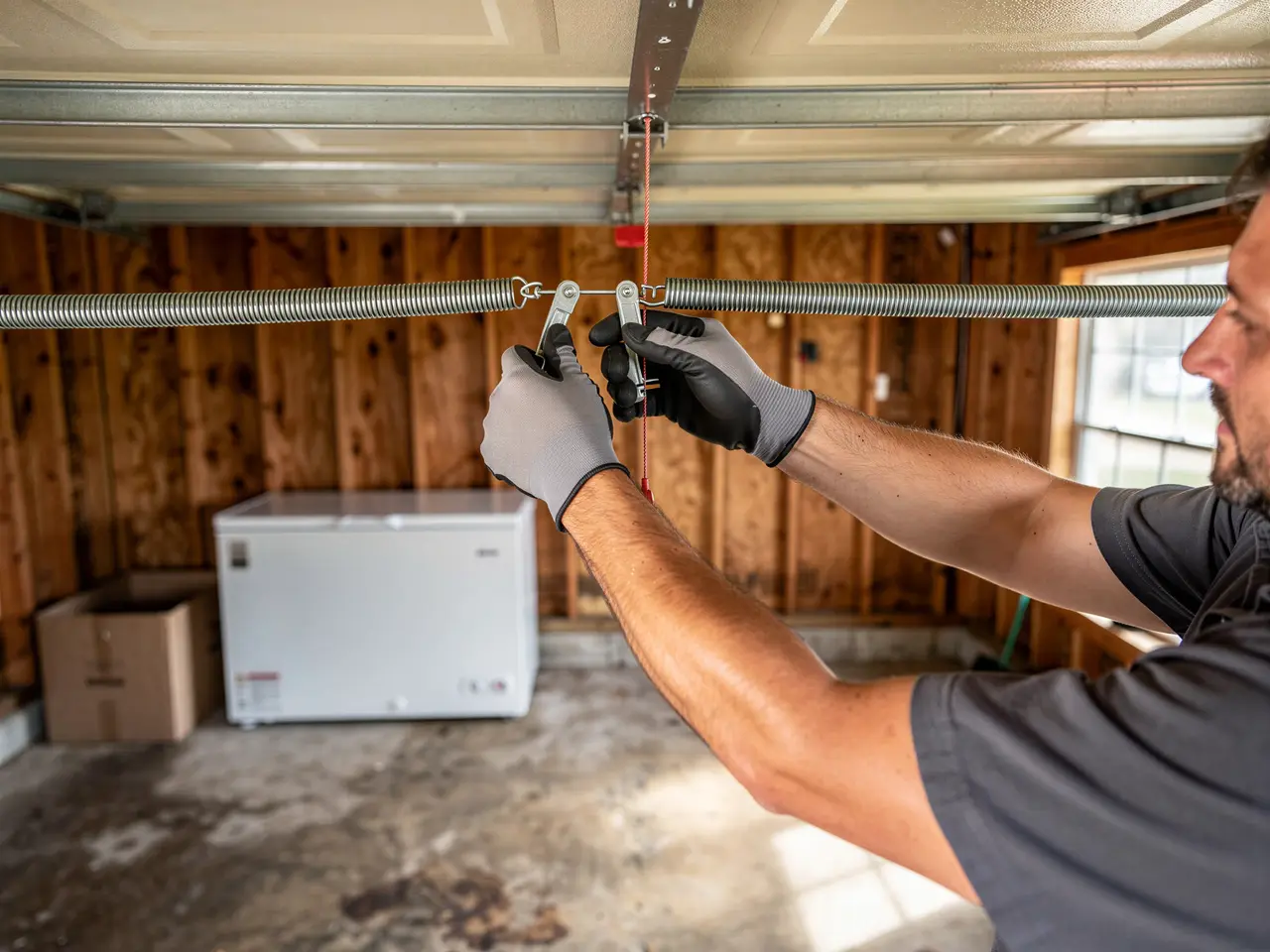
We work out of Kalamazoo and Eastwood sits about 3 miles northeast of the city, close enough that a spring call here doesn't turn into a half-day trip. That matters because a broken spring isn't a job you want to sit on - the door either won't open or it slams down on whoever's underneath it when the second spring on a double door finally lets go. We get a truck out, look at the shaft, the cable drums, and the spring winding cones before we touch anything, because guessing on spring size is how doors get hurt worse. On a typical double-door torsion setup the whole repair, start to finish, runs under two hours once we're on site. Single springs on narrower doors go faster. What takes longer is diagnosis when a homeowner tells us "the opener died" and it turns out to be a spring that's been slowly losing tension for months, dragging the opener motor down with it. That's common enough in Eastwood's older housing stock that we always check spring tension first, opener second.
What It Costs
Eastwood's median household income sits at $50,054, noticeably below the $70,051 median across the wider Kalamazoo service area. That gap is exactly why we talk price before we talk parts. A straightforward torsion spring swap is a repair, not a replacement - it's a fraction of the cost of a new door, and for a sound door with a tired spring, replacement almost never makes financial sense. Where the math shifts is when the door itself is failing: rusted-through end panels, a bent track that's been forced straight too many times, rollers that have chewed up their tracks. On a house built around 1955, a door that's original or close to it has usually been through two or three spring cycles already, and if the panels are going along with the spring, we'll say so rather than sell a spring job that just delays the real fix. We don't quote a number without seeing the door - spring size, door weight, and whether it's a single or double unit all move the price.
The Complications
Eastwood's housing stock runs older than the service-area median of 1969, with a lot of these homes going up closer to 1955. Doors from that era, where original hardware survives, often run on narrower shafts and older-style winding cones that don't match the stock torsion springs on newer doors. That means we're not always pulling a standard size off the truck - we measure wire gauge, coil diameter, and shaft length on site rather than assuming. Winters here fall into the same severe cold band as the rest of the region, and cold steel loses flex. A spring that's been quietly weakening all year is more likely to snap on the first hard-cold morning than in July, and the broken coil on a cold spring tends to be sharper and more likely to kick the cable off the drum when it goes. On older doors we also find rust-pitted cable where the spring looks fine, so we check both or the repair doesn't hold.
How We Fix It
We unload the spring tension slowly with winding bars, never by cutting a wound spring loose - that's how people lose fingers. Once the old spring's off, we check the drums, bearing plates, and the stationary cone for wear, because a spring that failed early sometimes took a worn bearing down with it. We set the new spring to the door's actual weight, not a guess, and run the door through a full cycle by hand before the opener touches it again, checking balance at the halfway point. A door that's balanced should sit still when you let go of it waist-height. If it drifts up or drops, the spring's wound wrong for that door and we adjust before we leave. On double-door setups we replace both springs together even if only one broke, because the surviving spring is usually close behind it in age and wear.
Stocked Parts
We carry a range of standard torsion spring sizes on the truck to cover most doors on the road, but some of Eastwood's older original hardware uses shaft and cone sizes that aren't common stock anymore. When a door's spring setup doesn't match what we carry, we'll tell you straight - it may mean a short wait on a special-order spring rather than a same-visit fix. That's the honest limitation: we'd rather delay a day for the right part than force a close-enough spring onto hardware it wasn't built for, which just sets up the next failure. For extension springs, still found on some older single-door setups here, we carry common lengths but check the door's lift weight before swapping, since an undersized extension spring is a common cause of early failure on its own.
What Causes It Around Here
The two things working against springs in Eastwood are age and cold. With a median build year around 1955, a lot of these doors are on their second or third spring already, and nobody's tracking the install date on hardware that old. Add the severe cold winters common to this whole area, and steel fatigue shows up faster - cold makes the coil brittle right when the door gets used hardest, since a cold garage means more temperature swing on the spring every time the door cycles. We also see openers that have been quietly straining against a weakening spring for months, which looks like an opener problem until we check tension and find the spring doing half the work it should. Across the roughly 2,879 households in Eastwood, we see this pairing - older hardware plus cold - come up often enough that it's the first thing we check, not the opener.
Frequently asked questions
How much does spring repair cost in Eastwood?
It depends on spring size, door weight, and whether it's one spring or a pair, so we don't quote blind. Given the income levels here, we lead with repair over replacement whenever the door itself is sound - a spring swap is a fraction of a full door replacement cost.
Why did my spring break in cold weather?
Cold steel is less flexible, and a spring that's already fatigued from age is more likely to snap when temperatures drop hard, which happens regularly here given the area's severe cold climate band. Older springs on older doors are the most common combination we see fail this way.
Is my door's spring a standard size?
Not always. Eastwood's housing stock runs older than the wider service area's median, with a build year closer to 1955, so some original hardware uses shaft and cone sizes that differ from what's common on newer doors. We measure on site rather than assume.
Should I replace the whole door instead of the spring?
Usually not, if the door itself is structurally sound - a spring repair costs far less than a new door. Replacement makes sense when the panels, track, or rollers are failing alongside the spring, which we check before quoting any job.
More garage door services in Eastwood
Book garage door service in Kalamazoo
Call now or request a quote - tell us what the door is doing and where you are.