
Kalamazoo, MI · Garage Door Service
Kalamazoo's 1960s and 70s Doors: Fix or Replace
Kalamazoo homes mostly date to the 1960s and 70s, with original doors built for mild use, not decades of cold-weather cycling. Here's how to judge yours.
- Repairs & new doors
- Springs & openers
- Serving 7 nearby communities
What Local Conditions Do
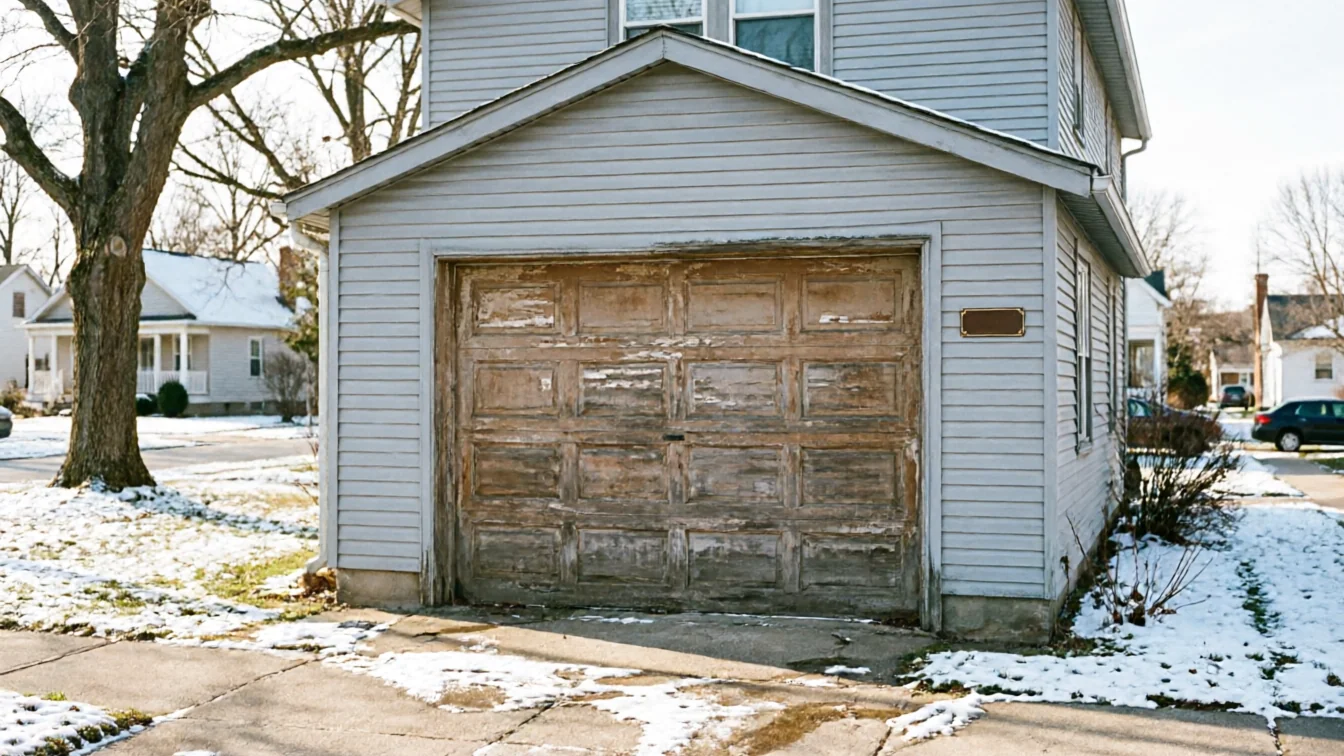
Most houses across Kalamazoo's named neighborhoods, from Westwood to Vicksburg, went up between 1938 and 1993, with the typical build year sitting around 1969. That means a lot of the original hardware in this area is now pushing sixty years old, installed back when 1960s and 70s construction was the norm across the 25 named areas that make up the service area.
Kalamazoo sits in a severe cold climate band. That matters more than most homeowners think, because a torsion spring doesn't fail from age alone - it fails from repeated flexing in temperature swings. A door that cycles from a 70-degree garage interior down through single digits, season after season for five decades, is working through metal fatigue at a rate a door in a milder climate never sees. The same goes for the steel in older tracks and the galvanizing on cable, both of which were specified to a lower standard than what gets installed today.
So the local condition isn't just "old door." It's old door plus decades of hard freeze-thaw cycling on hardware that was never rated for that kind of repeated stress in the first place.
What Most People Get Wrong
The common mistake is judging a door by whether it still opens. A door can open every day and still be one cold morning away from a spring letting go, especially on houses from that 1969 median build year where the original torsion spring was sized for a lighter door and a milder duty cycle than it's actually seeing now.
The opposite mistake happens too - people hear one bad noise and assume the whole door needs to go. Most of the time a worn roller or a stretched cable on a door from this era is a straightforward swap, not a reason to replace the panel. The panel itself, if it's steel and hasn't been dented or rusted through at the bottom, often has plenty of life left.
What actually decides it is the hardware generation, not the door's age in years alone. A door from the 1960s-70s stock with its original torsion spring and original track is a different call than one that's already had the spring replaced once. We look at what's original and what's already been touched before we say fix or replace.
What Is Going On
With 23,763 owner-occupied houses in this service area, most sitting on that same 1960s-70s stock, spring replacement is one of the most common calls we get on doors this age. The spring itself is carbon steel wound under heavy tension, and every open-close cycle puts a small amount of fatigue into that coil. In a severe cold climate, contraction in freezing temperatures adds extra load right at the moment the steel is least able to handle it. That's why so many of these springs let go on the coldest mornings of the year, not in the middle of summer.
Track misalignment is the other pattern we see on houses from the 1938-1993 range. Concrete slabs from that era have had sixty-plus years to settle unevenly, and a track bolted to a frame that's shifted even a half inch pulls the rollers out of true. That shows up as grinding or binding long before anything actually breaks, and it's often mistaken for a dying opener when the opener is doing exactly what it's told.
Leaving It Alone
A spring that's visibly stretched, flattened on one side, or showing rust in the coil gaps is not something to wait out. Once it goes, it tends to go without warning, and a double door with a snapped spring is heavy enough to hurt someone standing under it. If you've got a door original to a house in the 1960s-70s stock and nobody's touched the spring since, that's worth a look before next winter, not after.
Here's the honest limit: if the panel itself is rusted through at the bottom corners or the track is bent rather than just misaligned, we're not going to tell you a spring swap fixes it. At that point you're paying twice - once for the repair, again for the replacement a year or two later. We'd rather say that up front than do a patch job that doesn't hold.
Frequently asked questions
How do I know if my garage door is original to the house?
If your house falls in the 1960s-70s range common across this area and the spring and track look untouched - no replacement stickers, no mismatched hardware finish - it's likely original. We can confirm this on a visit by checking the spring wind and bracket style against what was standard for that build era.
Why does my spring always seem to break in winter?
Steel contracts in the cold, which adds tension right when the coil is already fatigued from decades of cycling. In this region's severe cold band, that combination is what pushes an aging spring past its limit, which is why winter mornings see more spring failures than any other time of year.
Is it ever worth replacing just the hardware and keeping the old panel?
Often yes, if the panel is steel and hasn't rusted through or been dented at the bottom corners. A lot of doors from the 1960s-70s stock in this area have panels with plenty of life left even though the spring and track are due. We'd rather replace what's actually worn than sell a full door you don't need.
Related garage door services in Kalamazoo
More garage door guides
Book garage door service in Kalamazoo
Call now or request a quote - tell us what the door is doing and where you are.