Kalamazoo, MI · Garage Door Service
Emergency Garage Door Repair Across the Kalamazoo Service Area
Broken spring or stuck door in the Kalamazoo area? We fix torsion springs, openers, and tracks on homes built mostly in the 1960s and 70s, day or night.
- Repairs & new doors
- Springs & openers
- Serving 7 nearby communities
Stocked Parts
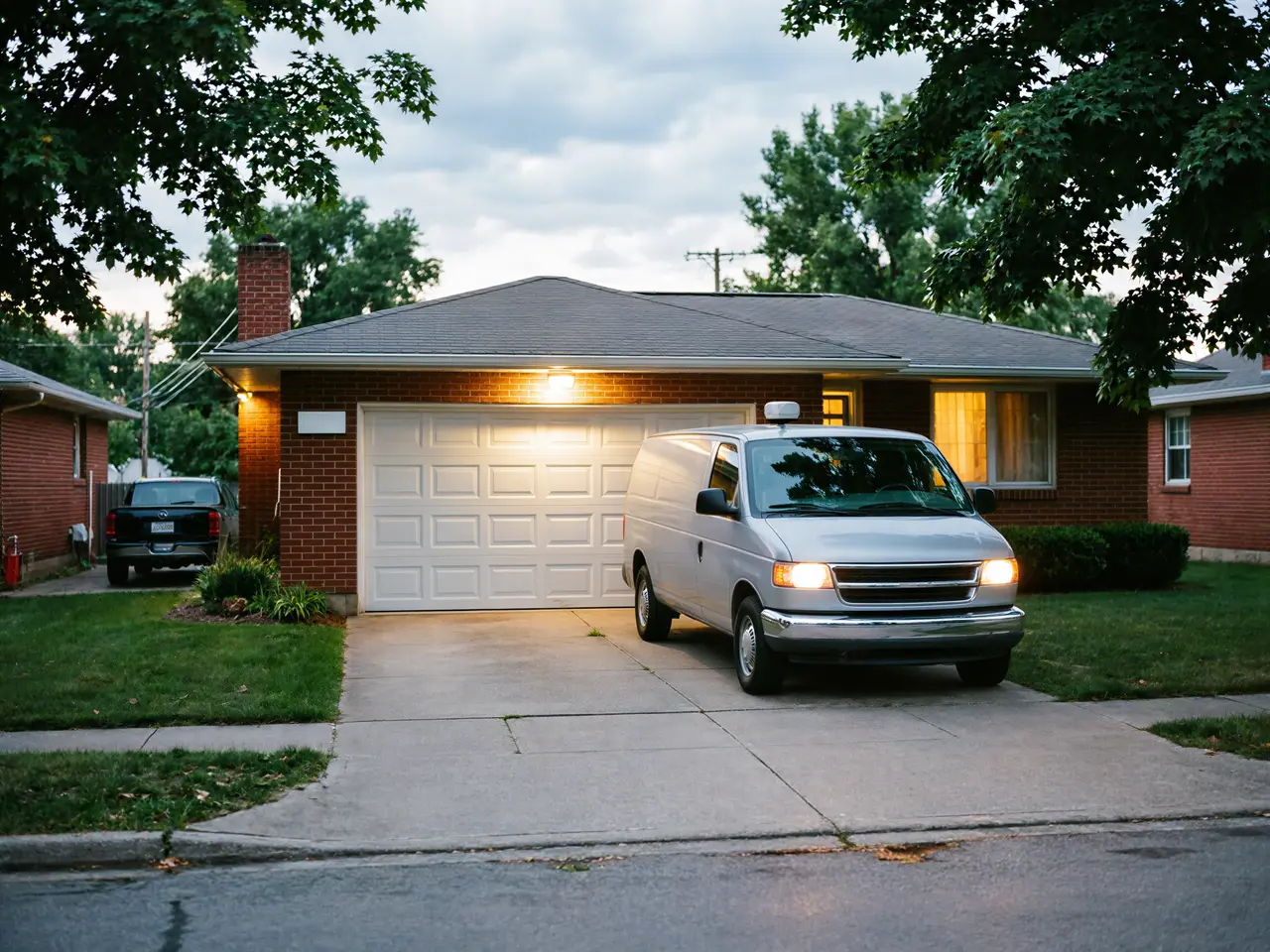
When a spring lets go at 9pm, the job doesn't wait for a supplier to open. Our trucks carry the sizes of torsion springs, extension springs, and cable that match what's actually on houses out here - a lot of 1960s and 70s builds, with the broader stock running 1938 through 1993 and a median year around 1969. That means standard-wind torsion springs on steel doors, older wood jamb mounts, and rollers that have outlived three or four openers. We keep rollers, hinges, cable, and bottom brackets rated for cold-weather steel on hand, because those are what get called in most across this area. What we don't stock is anything oddball - a custom-width door or a discontinued opener board. Those need a special order, and we'll tell you that up front instead of guessing at a fix.
For a region with 48,756 households and 23,763 owner-occupied houses, having the common sizes already on the truck is what turns a 2am call into a same-visit fix instead of a two-day wait. The parts that fail most are the parts we carry most.
What Causes It Around Here
A torsion spring is rated for a number of cycles, and cold makes steel brittle faster than people expect. This area sits in a severe cold climate band, and a lot of the housing going up the hill from 1969 construction still runs the original style of hardware, just replaced piece by piece over the decades. Steel contracts in deep cold, and a spring that's been flexing for fifteen winters is a lot more likely to snap on a January morning than a June afternoon.
Across the 25 named areas this service covers, the dominant building era is the same: 1960s and 70s stock, with some homes going back to the late 1930s. That means side-mounted torsion setups, single-car doors on older garages, and openers that have been swapped out more than once while the track and spring hardware stayed original. None of that is a design flaw - it's just what happens to steel and hardware after fifty-plus winters in a cold region. The failure isn't random; it's wear plus temperature, and it shows up in predictable spots: the spring, the cable, and the roller track.
What You Are Seeing
Most emergency calls fall into a short list. The door won't budge and the opener motor hums without moving anything - that's almost always a broken torsion spring taking the load off the cables. A loud bang from the garage, usually in the morning when it's coldest, is a spring letting go. A door that's crooked, hanging lower on one side, usually means a cable has slipped off the drum or snapped outright.
A door that reverses halfway up, or won't close all the way and backs off the floor, points to a track that's bent or a roller that's seized in cold weather - steel rollers lose lubrication faster when the temperature drops, which lines up with why these calls cluster in the colder months here. If the opener runs but the door doesn't move at all, check whether the emergency release cord got pulled; that's not a repair call, just a reset.
We can't diagnose over the phone with full certainty - a bent track and a broken spring can sound similar from the other room - but these patterns tell us which parts to bring before we even pull into the driveway.
How We Fix It
First call is triage: is the door safe to leave as-is until morning, or is it a hazard right now. A broken spring with the door down is usually fine to wait on; a door stuck halfway open isn't. We talk through it on the phone before anyone drives out.
On site, we replace the failed part - spring, cable, roller, or track section - matched to the door's size and the opener's lift capacity, not a generic swap. For the 1960s and 70s stock that makes up most of this service area, that often means standard torsion sizing, which we carry. For older or oddball setups, sometimes the honest answer is that a full spring and cable replacement makes more sense than patching one broken piece, since the rest of the hardware is the same age and close to the same failure point.
With a median household income of $70,051 across the area, most owners we talk to want a straight repair-versus-replace answer, not an upsell. If a fix will hold for years, we say so. If the door is close to the end of its service life and another part is likely to go next winter, we say that too. We don't push a full door replacement on a spring call just because we're already there.
Frequently asked questions
Do you come out for garage door emergencies at night?
Yes - we take emergency calls outside normal hours for situations like a broken spring, a door stuck open, or a door that's come off its track. On the phone we'll ask what you're seeing so we bring the right parts the first trip.
Why did my spring break in cold weather and not before?
Steel springs lose flexibility as the temperature drops, and this area sits in a severe cold climate band. A spring near the end of its cycle life is far more likely to snap on a cold morning than during a warm stretch, which is why these calls spike in winter.
Is it ever not worth repairing the door?
Sometimes, yes. If the door and opener are both old and several parts are near failure at once, patching one piece can mean another breaks within months. We'll tell you when replacement is the better value instead of stacking repairs.
Do you carry parts for older garage doors?
We carry the torsion springs, cable, and roller sizes common on the 1960s-70s housing stock that makes up most of this area. Custom widths or discontinued opener parts sometimes need a special order, which we'll flag before starting the job.
Related services
Book garage door service in Kalamazoo
Call now or request a quote - tell us what the door is doing and where you are.