
Kalamazoo, MI · Garage Door Service
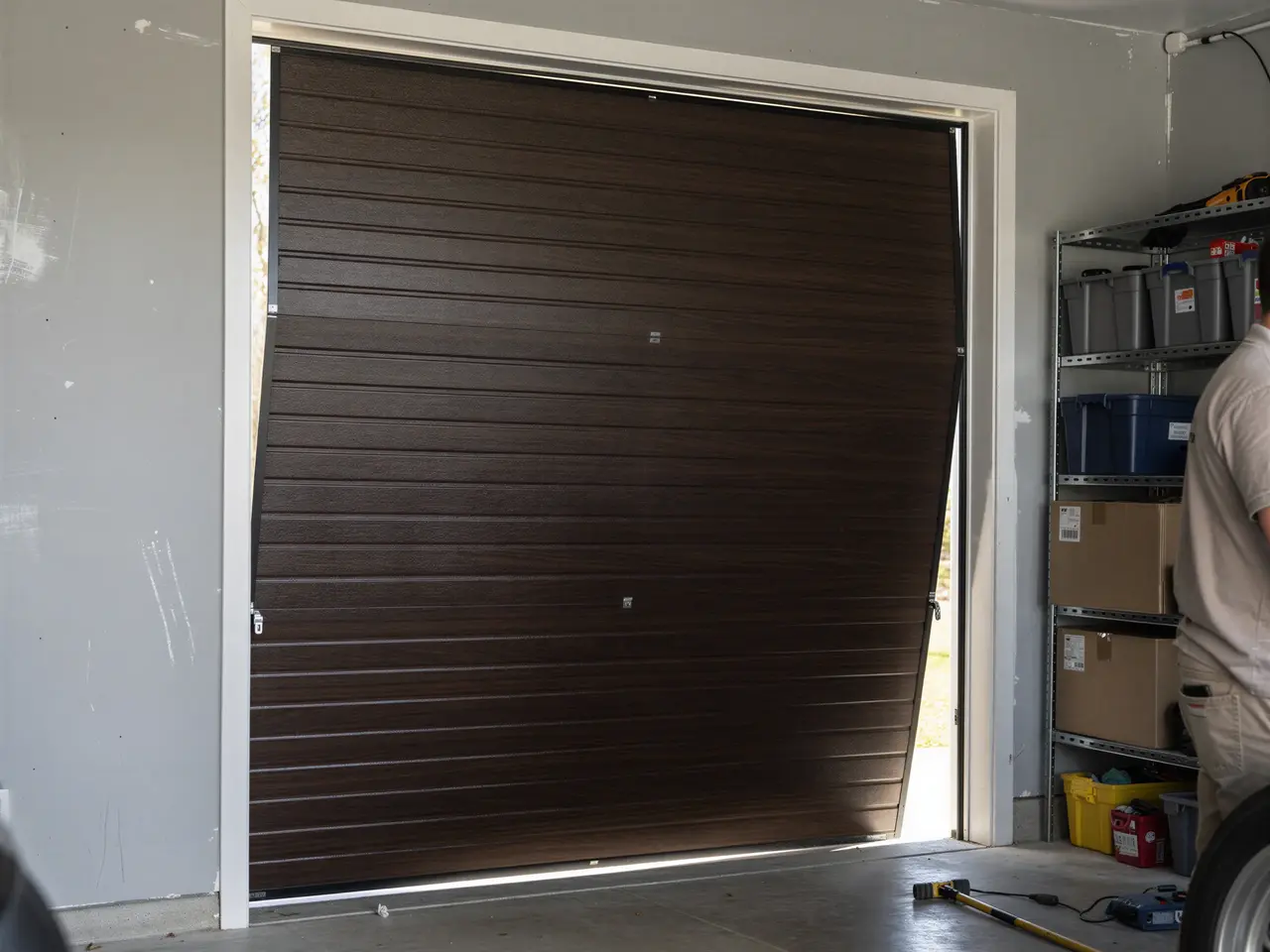
Off-Track Garage Door Repair for Eastwood Homes
Eastwood homes mostly went up around 1955, and that era's track and bracket hardware isn't what you'd find on a house built today. Here's what off-track repair looks like here.
- Repairs & new doors
- Springs & openers
- Serving 7 nearby communities
Time on the Job
Eastwood's houses cluster around a 1955 build date, which puts most of the neighborhood's original garage structures a decade or two ahead of the stamped steel track most repair shops stock today. A door that's come off its track here is usually fighting old bracket spacing, not a modern defect. We come from Kalamazoo, about 3 miles out, so there's no depot sitting in Eastwood itself - every job starts with a drive, and we tell people that up front rather than promise a local response time we can't back up. Once we're on site, the first ten minutes are diagnostic: is the track bent, is a bracket pulled from the jamb, or did a cable jump the drum and drag the door sideways. On a neighborhood this age, it's often the bracket - the lag screws that held it to framing lumber 65-plus years ago have backed out a thread or two over time, and that's enough play for a roller to walk right off the rail under a hard stop or a slammed remote.
What It Costs
We don't have a posted price for off-track work here, and we're not going to invent one - too much depends on whether it's a bent section of track, a pulled bracket, or a door that's been forced back onto the rail by hand and bent the roller stems in the process. What we can tell you is that Eastwood's median household income runs lower than the wider Kalamazoo service area - about $50,054 against $70,051 across the full area - and we price the same whether the job's here or anywhere else we cover. A straightforward bracket reset costs less than a cracked track section that needs full replacement. If someone's tried to force the door back on the rail before calling, that usually adds parts to the ticket, not less.
The Complications
The complication in a neighborhood built around 1955 isn't the track itself - track is track - it's what the track is screwed into. Door jambs framed in that era weren't always doubled up the way code calls for now, and a bracket that's pulled loose once tends to pull loose again if it goes back into the same worn screw holes. We also see this: homeowners who've had an opener added or swapped out sometime in the decades since the house was built, and the opener's travel limits no longer match a track that's since been bent and straightened. That mismatch puts stress right back on the same spot. Cold-climate swings don't help - hard freezes followed by thaw cycles work screws and brackets loose over years, section by section, until one hard close is enough to walk the door off the rail. We'll tell you straight if a bracket's going to need new wood behind it, not just new screws, because reusing failed holes is a repeat call waiting to happen.
How We Fix It
First we take the door off auto operation and run it by hand to see exactly where it binds or jumps. If a bracket's pulled from the frame, we relocate the fasteners to solid wood rather than redrive into the same chewed-up holes - that's the fix that actually holds on a house this age. A bent track section gets replaced, not hammered straight; straightened track looks fine and then kinks again under load within a season. If cables have jumped the drum, we reseat and retension them and check the opposite side cable too, since one side failing usually means the other's close behind. Last step is running the door through a full cycle by hand and then on the opener, watching the rollers track true the whole way, not just at the top and bottom of travel.
Stocked Parts
We carry standard-gauge track sections, rollers, and brackets on the truck, which covers most off-track calls without a second trip. What we don't always have on hand is a replacement for a track style that's been discontinued - some older low-headroom setups used hardware that current manufacturers don't make in the exact original profile, and on a 1955-era house that's a real possibility. When that happens, we'll tell you honestly whether a universal replacement will fit and work, or whether the job needs an order that takes a few days. We're not going to pretend a part's in stock when it isn't.
What Causes It Around Here
Across Eastwood's roughly 2,879 households, the pattern we see most is age catching up with original hardware - brackets loosening in old framing, galvanized track thinning at the bend points after decades of cold-season expansion and contraction. The region's winters are classified as severe cold, and that matters here specifically because freeze-thaw cycling is what works screws loose year over year; it's not a one-time event, it's accumulated wear. We also see doors knocked off track by impact - a car bumper, a bike, a basketball - which is unrelated to age but common on any driveway. The honest answer is that most off-track calls in a neighborhood this age are hardware fatigue, not operator error, and that's worth knowing before you blame yourself for a slammed button.
Frequently asked questions
Why does my door keep coming off the track even after it's been fixed once?
On a house built around the mid-1950s, the bracket holding the track to the jamb is often going back into the same worn screw holes. If the wood underneath hasn't been reinforced, the bracket works loose again under normal use, and the door walks off the rail the next time it takes a hard stop.
Do you have a shop in Eastwood?
No. We work out of Kalamazoo and drive the roughly 3 miles into Eastwood for calls. We don't claim a local response time we can't guarantee, but it's a short trip and we tell you honestly where you stand in the schedule when you call.
Is a bent track always a full replacement?
Usually, yes. A track that's been bent and then hammered straight tends to kink again at the same point once it's back under the door's weight. We replace the bent section rather than reshape it, because a repeat failure costs more than doing it right the first time.
Can cold weather really cause this?
Yes. This area sits in a severe cold climate band, and repeated freeze-thaw cycles work screws and brackets loose over years. It's gradual wear, not a single storm event, so a door that's fine in September can come off track after a few winters of that cycling.
Book garage door service in Kalamazoo
Call now or request a quote - tell us what the door is doing and where you are.