
Kalamazoo, MI · Garage Door Service
New Garage Door Installation for Eastwood's 1950s Housing Stock
Eastwood homes mostly date to the mid-1950s, a decade older than the wider Kalamazoo area median. We install new doors built for that original hardware and this area's cold-climate demands.
- Repairs & new doors
- Springs & openers
- Serving 7 nearby communities
Time on the Job
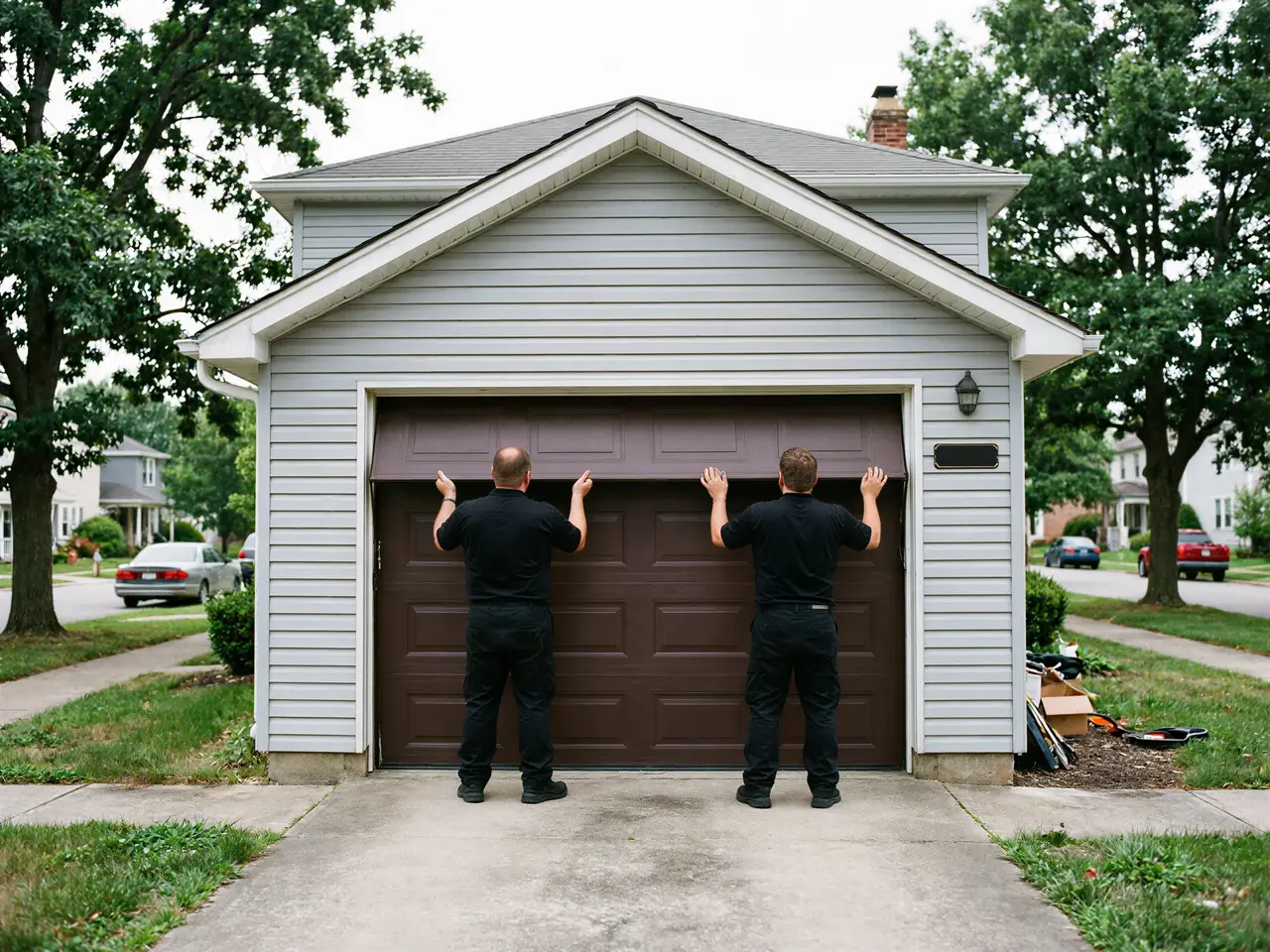
Eastwood's median home dates to 1955, a good 14 years ahead of the 1969 median across the wider Kalamazoo service area. That matters for a job like this: a house built in '55 almost never got its garage door touched since the original install unless something broke outright. The track, the jamb brackets, the header reinforcement - a lot of that is still the same steel that went up with the framing. When we come out to measure for a new door, we're not just measuring the opening. We're checking whether the header can carry a heavier insulated section, whether the jambs are square after six-plus decades of settling, and whether the old track spacing even matches what current doors ship with. On a three-mile drive out from Kalamazoo, that prep work is most of the first hour, before any door goes anywhere near the opening.
What It Costs
Eastwood's median household income sits at $50,054, noticeably below the $70,051 median for the broader service area. That gap shows up in the kind of job we get called for here more than in a sales pitch - we see fewer whole-house upgrade packages and more single-door replacements done because the old one finally failed. We're not going to quote a number in writing without seeing the opening, since header condition, track replacement, and insulation level all move the price. What we will say plainly: if your opening and jambs are sound, a straight door swap costs a lot less than a job where we're also rebuilding the framing underneath 1955-era lumber that's shifted over time.
The Complications
This area sits in a cold-severe climate band, and a house built in 1955 wasn't insulated with that in mind - garages back then were built to keep a car dry, not to hold heat. That means the opening itself is often undersized or oddly framed compared to what a modern insulated steel door expects, and the original header may not have been sized for anything heavier than a single light wood panel. We also run into non-standard spring mounts on houses from this era - side-mounted extension springs instead of a torsion bar - which changes what hardware goes in above the new door. None of this is unusual for Eastwood specifically; it's what you'd expect from a block of houses that's averaged seven decades without a door upgrade.
How We Fix It
We start by pulling the old door and track completely rather than trying to reuse brackets that were set for a lighter, thinner panel. If the header's undersized for a modern insulated door, we sister in new framing before the door goes in - skipping that step is how you end up with a door that racks in the opening within a year. Torsion conversion is standard on these jobs when the house still has old extension springs; it's safer and it lasts longer under the cold-season cycling this area gets. Once the frame and hardware are right, the door itself is usually the fast part of the day.
Stocked Parts
We carry common torsion springs, standard rollers, and the track hardware that fits most openings we run into on jobs like this. What we don't keep on the truck is anything sized for a non-standard, decades-old opening - if your jambs are out of square or the header needs custom bracing, that's a measure-first, order-second job, and the lead time depends on what the door manufacturer has in stock that week. We'd rather tell you that up front than promise a same-day install we can't back up on an odd-sized opening.
What Causes It Around Here
The short version: age. A door and track system installed when a house went up in 1955 wasn't built to last past the 1980s, and a lot of them are still hanging on well past that. Panels delaminate, extension spring hardware fatigues from decades of cold-weather cycling, and headers that were fine for a 90-pound wood door start to flex under anything heavier. None of that is a defect specific to one house - it's what seven decades of winters in this climate band does to original garage hardware that nobody's ever replaced.
Frequently asked questions
Is Eastwood far enough from Kalamazoo that scheduling is a problem?
No. Eastwood is about three miles from Kalamazoo, so it's a short trip for us, not a special routing situation. We handle the install and framing work the same day we'd plan for a Kalamazoo job.
Do I need to replace the whole frame, or just the door?
Depends on the header and jambs. On a lot of 1955-era Eastwood homes, the original framing was sized for a much lighter door, so if you're moving to a heavier insulated steel door, we often need to reinforce the header first. We'll tell you after we measure, not before.
Why does my garage door use extension springs instead of a torsion bar?
That was common construction for houses built in the mid-1950s in this area. It's not wrong, just older technology. When we install a new door, we typically convert to torsion hardware since it holds up better under heavy cold-season use.
Can you give me a price over the phone?
Not an accurate one. Jobs on original 1955-era openings vary a lot depending on header condition and whether the jambs are square, so we quote after we've seen the opening in person.
Book garage door service in Kalamazoo
Call now or request a quote - tell us what the door is doing and where you are.