
Kalamazoo, MI · Garage Door Service
Panel Replacement for Plainwell's Older Garage Doors
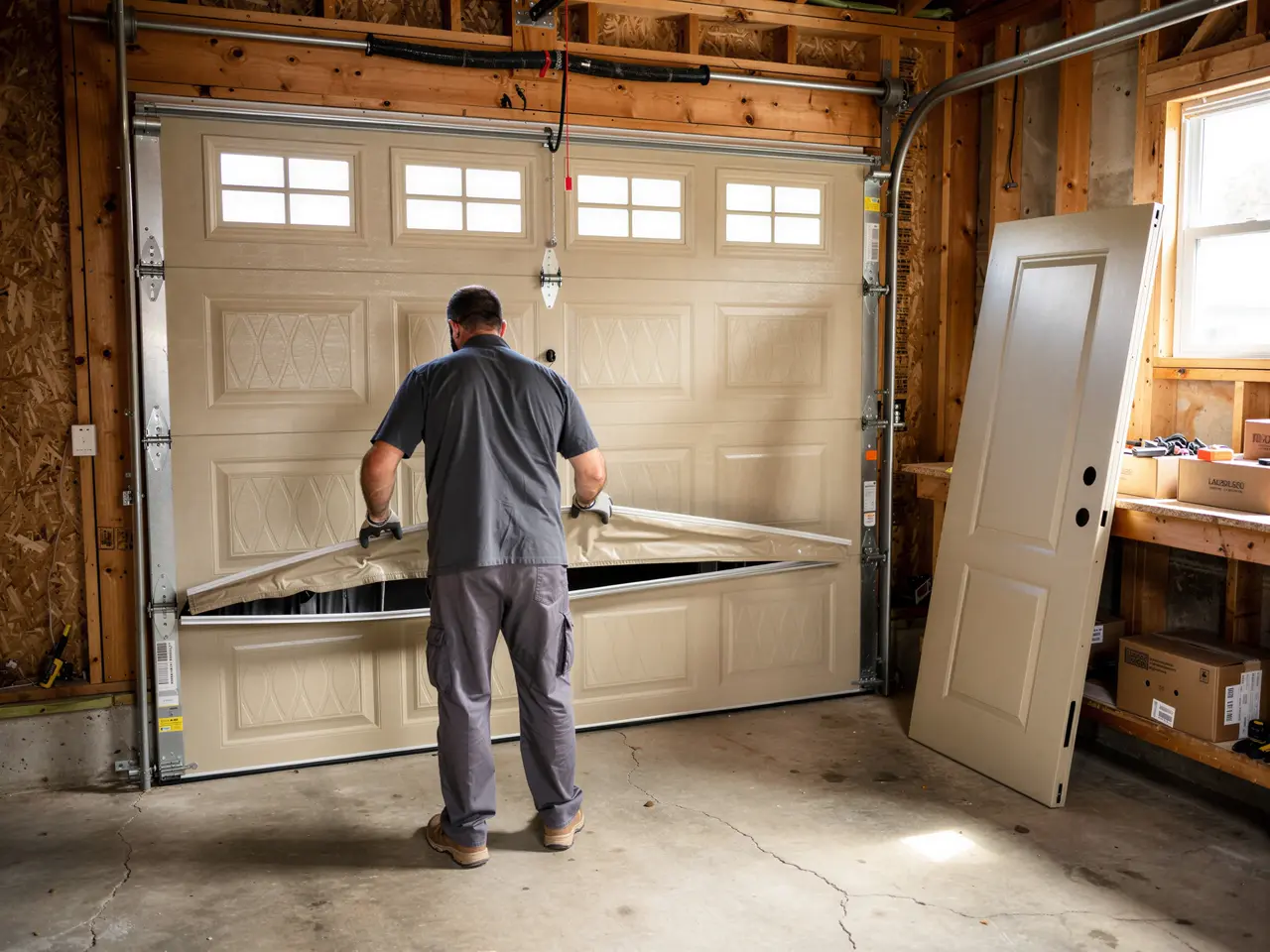
Panel replacement for Plainwell's mid-1960s steel doors, 12 miles out from Kalamazoo. Matching sections on older single-car and two-car doors, parts we carry, what we don't stock.
- Repairs & new doors
- Springs & openers
- Serving 7 nearby communities
What It Costs
Plainwell's housing stock centers on 1965, which means most garage doors here are steel, raised-panel, either single-car (8 or 9 foot) or two-car (16 foot) sections hung on a short track with a lightweight torsion or extension spring setup built for that era's lighter doors. The panels themselves are usually 24 or 25 gauge steel over a thin foam core, nothing like the thicker insulated sections sold today. A single damaged section on one of these doors doesn't always mean the whole door goes - if the rest of the panels are flat and the track is straight, swapping one section is often enough.\n\nWe don't quote exact dollar figures sight unseen, because the same door can run two different prices depending on whether the matching panel is a common width we carry on the truck or something we have to source for a discontinued line. What we can tell you up front: a door this age built before insulated steel became standard usually runs cheaper to repair than one of the newer two-inch-thick insulated models, because the material itself is simpler and the hardware underneath hasn't changed as much. We travel to Plainwell from Kalamazoo for every job, so the quote always accounts for that trip, not a local dispatch fee.
Stocked Parts
For doors built around the mid-1960s, the panel widths and section heights are common enough that we keep several on hand without having to special-order. Standard raised-panel steel sections in the usual single and double door widths are something we can usually pull straight off the truck. What we don't stock: decorative overlay panels, wood-look composite sections, or anything from a line that's been discontinued for twenty-plus years, which some of Plainwell's older doors do carry if a prior owner upgraded the look but kept the original frame.\n\nIf your door falls into that second category, expect a short wait on the matching section rather than a same-visit fix. We'll tell you that at the door, not after we've already started.
The Complications
A door built when median construction in this area was 1965 usually comes with a torsion or extension spring sized for a lighter, uninsulated panel. Swap in a single replacement section that's heavier - say, a foam-filled retrofit panel because the original gauge steel isn't made anymore - and the spring tension that's held fine for decades suddenly can't lift the door evenly. That shows up as a door that racks sideways on one track, or a panel that doesn't sit flush at the bottom after the swap.\n\nThe other complication is track alignment. On a door this old, the track itself has usually shifted slightly over the years, even if nobody noticed because the panels were worn evenly. Install a brand-new section into an out-of-true track and you'll see the new panel scuff or bind long before the rest of the door shows wear. We check track plumb before we order the replacement section, not after it's already hung crooked.
What Causes It Around Here
The area sits in a cold climate zone with severe winter conditions, and that's the main driver of panel damage on doors from this era. Steel that's been expanding and contracting through decades of freeze-thaw cycles gets brittle at the seams first - that's usually where you see a split start, along the bottom section where road salt and slush collect against the panel edge all winter. Denting from a scraped snowblower or a car bumper finishes off a panel that was already thinning from corrosion underneath the paint.\n\nPlainwell households here report a median income of $65,846, which tends to mean owners hold onto a functioning door longer and only replace the section that's actually failed rather than the whole unit - that's consistent with what we see on these calls. With roughly 1,493 households in the area and a housing stock built mostly in the 1960s and 70s, a lot of these doors are due for a panel repair simply from age, not from one specific incident.
Frequently asked questions
Will a new panel match the faded color on the rest of my door?
Not exactly, usually. Steel sections on a door from the mid-1960s have faded unevenly for decades, and new steel comes primed or in a current stock color. We can tell you how close a match is likely before we order, but an exact blend isn't something we promise.
Do you carry panels for older double-car doors common in Plainwell?
We stock standard raised-panel steel sections in the common single and double widths used on doors from that era. If your door has a discontinued overlay or composite panel, we'll need to source it, which takes longer than a same-visit swap.
Is it worth replacing one panel instead of the whole door?
Often yes, if the rest of the panels are flat, the track is straight, and the spring can still handle the door's weight after the swap. We check all three before recommending a single-panel fix over a full door replacement.
Do you have a local branch in Plainwell?
No. We run out of Kalamazoo and travel to Plainwell for every job, about 12 miles each way. That's factored into scheduling and quotes rather than handled as a separate local dispatch.
More garage door services in Plainwell
Book garage door service in Kalamazoo
Call now or request a quote - tell us what the door is doing and where you are.