
Kalamazoo, MI · Garage Door Service
Garage Door Repair for Portage Homes
Portage homes built around 1978 run newer torsion hardware than much of the Kalamazoo area. We drive the 5 miles out and fix what that hardware actually does.
- Repairs & new doors
- Springs & openers
- Serving 7 nearby communities
The Complications
Portage's median home dates to 1978, which puts a lot of this town about a decade newer than the typical house across the wider Kalamazoo service area, where the median build year sits closer to 1969. That gap matters more than it sounds like it should. A door and opener installed in a late-1970s build is old enough that the original springs are long past their rated cycle count, but the track and drum setup from that era is different from the 1950s and 60s hardware we see elsewhere - different spring sizing, different drum pitch, sometimes a different mounting bracket that newer universal parts don't match cleanly. If nobody's touched the door since the house was built, what's up there is original, and original parts from 1978 aren't stocked anywhere off a shelf. We bring what fits, not what's close enough. The honest limit here: if the opener is original to a 1978 install, we usually recommend replacing it outright rather than hunting down a compatible logic board for a unit that old - the labor to chase a part that may not exist costs more than a new opener.
What It Costs
We don't post a flat number for Portage calls because what you're paying for is the parts your specific door needs, not a standard visit. A torsion spring swap on a door from the late 1970s is usually a different cost than on a newer door, since spring wire gauge and drum size vary by era and by door weight. We quote once we've seen the door and confirmed what's actually failing - spring, cable, roller, opener gear, or some combination. We travel the roughly 5 miles from Kalamazoo to reach Portage, and that trip is built into how we schedule the day, not added as a separate surcharge.
How We Fix It
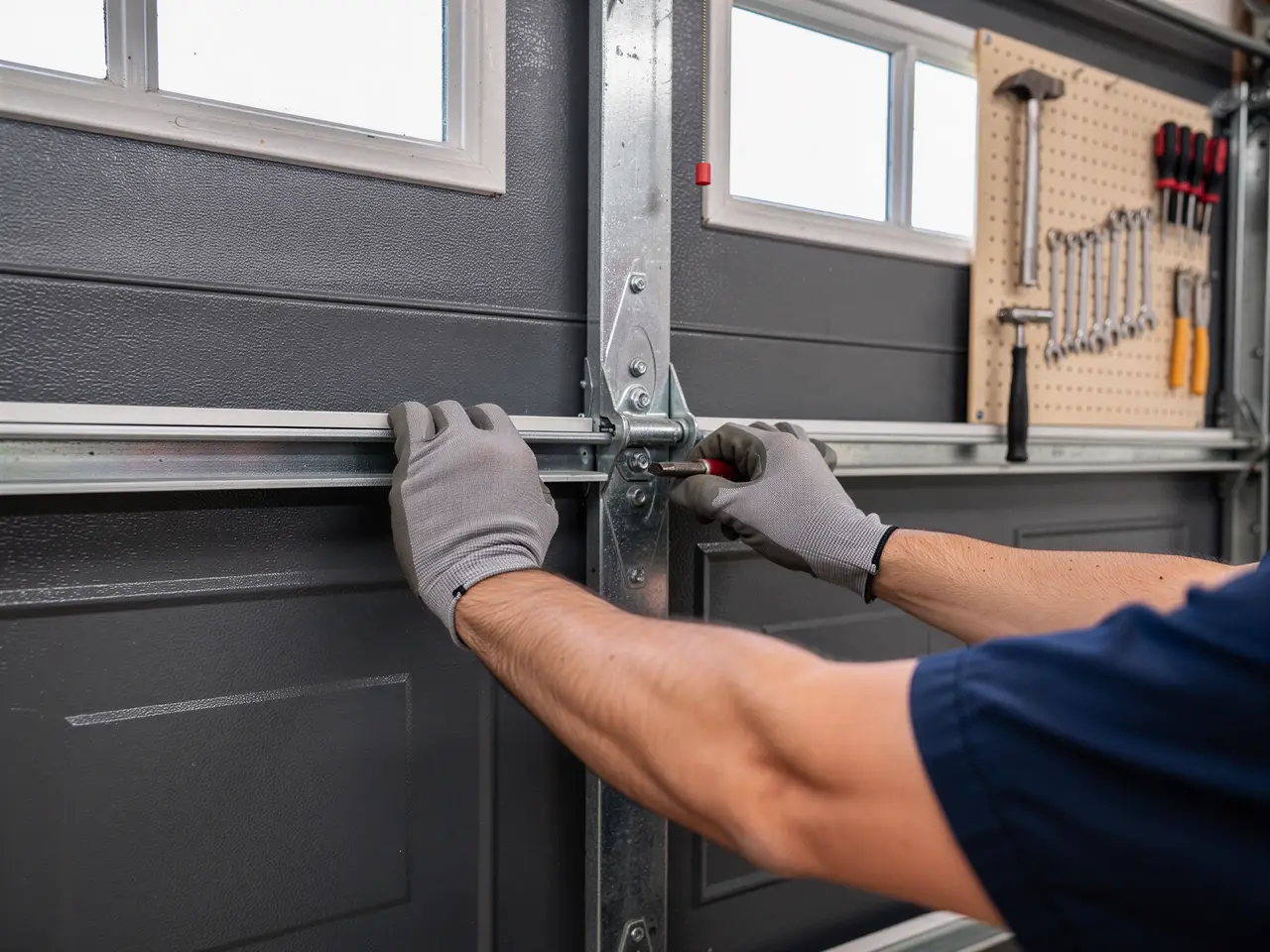
We start by identifying the failure, not guessing from the symptom. A door that won't open could be a snapped torsion spring, a broken cable, a stripped opener gear, or a bent track - each has a different fix and a different cost, and treating them the same wastes your money. On a late-1970s door we check whether the torsion hardware is original before we touch it; if the drums or shaft show wear beyond the spring itself, we tell you before we start, not after. For openers from that era, we test the logic board and motor separately from the mechanical side, because it's common for one to fail years before the other. We replace only what's actually broken, and we test full-cycle operation - balance, auto-reverse, travel limits - before we leave.
What You Are Seeing
A door that slams the last foot of travel usually means a worn or broken torsion spring no longer carrying its share of the weight. A door that opens partway and stops is often an opener gear worn past its teeth, which is a common failure point once an opener passes a few decades in service. Grinding or popping from the top of the door points to a drum or bearing issue, not the opener at all. If the door is noticeably heavier to lift by hand than it used to be, the spring is weakening gradually rather than failing all at once - that's the version you can still schedule around instead of the version that strands your car in the garage.
Stocked Parts
We carry torsion springs across the range of sizes used in both the older 1960s-70s stock common through the broader Kalamazoo area and the slightly newer hardware typical of Portage's late-1970s builds, along with standard rollers, cables, and hinges. What we don't keep on the truck is opener-specific circuit boards for discontinued models - if your 1978-era opener needs a board that's no longer made, replacement is usually the faster and cheaper path than sourcing a part that may not exist anymore.
What Causes It Around Here
The region sits in a severe cold climate band, and that matters for garage doors specifically: steel contracts in deep cold, which tightens tolerances on tracks and rollers that were already sized loosely by factory spec decades ago. Combine that with a door and hardware set that's been in continuous use since a 1978 build, and the failure pattern is predictable - springs that have done their last few thousand cycles finally let go on a cold morning, right when the steel is least forgiving. It's not bad luck. It's hardware reaching the end of a cycle count it's been approaching for years, triggered by a temperature swing it was never going to handle gracefully forever.
Frequently asked questions
Is my garage door hardware original to the house if it was built in 1978?
It's common. A lot of Portage homes from that era still have original torsion springs and track if nobody's logged a repair. Springs have a rated cycle life, and by now most original springs from 1978 are well past it, which is why sudden breaks are common on houses that have never had the door serviced.
Do you have a shop or depot in Portage?
No - we're based in Kalamazoo and drive the roughly 5 miles out to Portage for every call. There's no separate branch here, so scheduling runs through the same dispatch as the rest of the service area.
Why does my opener from the late 1970s need replacing instead of repairing?
If the logic board on an opener that old fails, a matching replacement board often isn't manufactured anymore. At that point sourcing an obsolete part costs more in labor and risk than installing a new opener, so we'll tell you honestly when that's the better option.
Does winter weather actually affect garage door failures here?
Yes. This area sits in a severe cold climate band, and cold steel is less forgiving on tracks and springs that are already worn. A spring near the end of its life is more likely to snap on a cold morning than a mild one, since the metal is stiffer and less tolerant of the sudden load.
More garage door services in Portage
Book garage door service in Kalamazoo
Call now or request a quote - tell us what the door is doing and where you are.