
Kalamazoo, MI · Garage Door Service
Garage Door Repair and Replacement for Portage Homes
Portage's homes date mostly to the late 1970s, meaning steel sectional doors on extension springs - different stock than closer to Kalamazoo, 5 miles away.
- Repairs & new doors
- Springs & openers
- Serving 7 nearby communities
The Complications
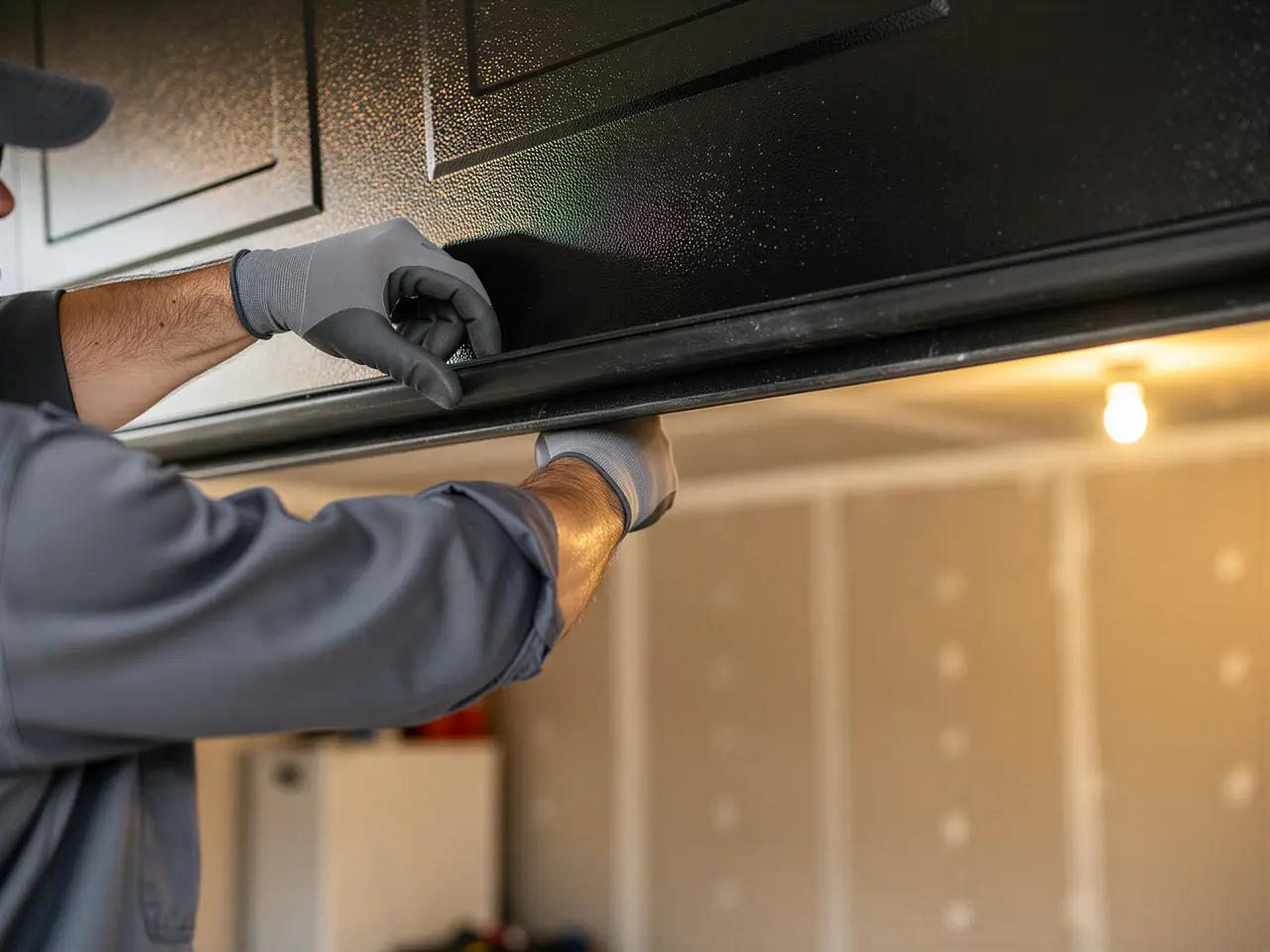
Most houses in Portage went up in the late 1970s, which puts the typical garage door here a full decade newer than the stock you'd find in the older sections nearer Kalamazoo. That decade matters. A 1978 build almost always came with a steel sectional door - usually a 16-foot double, sometimes a single 9-footer on the older end of the lot - hung on extension springs rather than the torsion bar that shows up on homes built later. Steel panels of that era are thinner than what's sold today, with no foam insulation between the skins, so they dent easier and flex more in wind. The hardware is plain: open coil extension springs riding over the horizontal track, a pair of galvanized cables, and a chain-drive opener bolted to a header that's now pushing fifty years old. None of that is rare - it's just consistently what's behind the door in this part of the service area, and it's why the common failures here run toward snapped extension springs and frayed cables rather than the torsion-spring issues you'd expect on newer construction.
What It Costs
We don't quote a number without seeing the door, and we won't pretend every job in Portage costs the same. What drives the price is simple: whether you've got one spring or a pair, whether the cable snapped clean or took the drum with it, and whether the opener is original equipment or already a replacement. Extension-spring jobs on these 1970s doors tend to run more predictable than torsion work, since there's less to disassemble, but a stuck or bent track on a double door adds labor regardless of spring type. If the panels themselves are dented or the steel has started to rust through at the bottom - common once a door passes the 40-year mark - replacement starts looking cheaper than another repair, and we'll say so rather than patch something that's going to need the same call again in a year. We give a firm number on site, after we've opened the door and looked at what's actually wearing, not over the phone.
How We Fix It
On an extension-spring door, we pull both springs as a set even if only one broke - the other is the same age and under the same fatigue, and replacing one side without the other just moves the failure down the road. We check the drums, the cable condition end to end, and the track alignment before anything goes back together, because on a door this age the track has usually taken decades of minor bumps and isn't always sitting true. If the opener is original chain-drive, we test the travel limits and the force setting rather than assuming they're still correct - gear sets wear slowly and a door that's drifted out of adjustment puts more strain on the new springs than it should. Panels get checked for rust at the bottom corners where moisture sits longest. We won't tell you a repair will outlast the rest of a forty-six-year-old door if the steel's already going; sometimes the honest fix is telling you where the next failure is likely to be.
What You Are Seeing
If the door in Portage won't stay up on its own and drops the second you let go of it, that's almost always an extension spring that's lost tension or snapped outright - common on doors from this build era because the springs have had decades of cycles. A door that jerks or binds partway up is usually a cable that's frayed and starting to bind on the drum, or a track that's shifted slightly out of plumb against the jamb. A loud bang followed by the door refusing to move at all is most often a spring letting go entirely, which on an extension-spring setup can also damage the pulley or the overhead track bracket if it happens under load. Rust streaks running down from the bottom roller brackets point to water sitting in the track, which on an older steel door speeds up corrosion at the hinge points faster than most owners expect.
Stocked Parts
We carry the extension springs, cables, and drums sized for 16-foot and 9-foot steel sectional doors, which covers the great majority of what's installed in Portage's 1970s housing stock. Standard rollers, hinges, and bottom brackets for that era are also on the truck, along with chain-drive opener parts for the gear sets most commonly paired with doors from this period. What we don't carry on the truck is anything custom - a non-standard panel width, a discontinued opener logic board, or hardware for a door that's been modified from its original configuration. Those jobs need a part ordered first, and we'll tell you that up front rather than make a second trip look like bad planning.
What Causes It Around Here
This area sits in a severe-cold climate band, and that cold is hard on steel doors from the 1970s in a specific way: the extension springs and cables lose tensile strength faster when they're cycling through freeze-thaw swings than torsion springs enclosed in a shaft do. Moisture that gets into the track during a thaw refreezes overnight, which is what causes the binding and grinding a lot of Portage owners notice first thing on a cold morning. The steel panels themselves, uninsulated as most were built, also contract enough in deep cold to change how they sit against the weatherstrip, which is a separate problem from the spring and cable wear but shows up around the same time of year. None of this is a one-season fix - it's wear that accumulates over decades of winters, which lines up with why so many of these doors are due for real attention around now.
Frequently asked questions
Why does my garage door feel heavier in winter?
Cold makes the lubricant in the rollers and hinges thicker and can let the extension springs lose a little tension, so the opener has to work harder to lift the same door. On a steel door from the 1970s, that extra strain is often what finally snaps a spring that was already near the end of its life.
Is it worth replacing just the broken spring or both?
On an extension-spring door we replace both sides together. They're the same age and under the same wear, so leaving the old one in place usually means a second failure within months - you'd end up paying for labor twice instead of once.
Do you have a shop in Portage?
No - we run out of Kalamazoo, about 5 miles away, and come out for the job rather than working from a local branch. That distance doesn't change what parts we bring or how we handle the repair once we're on site.
How do I know if my door needs replacing instead of repair?
If the steel panels are rusted through at the bottom corners or the door is visibly out of square on the track, repair becomes a short-term fix. We'll tell you honestly on site whether another spring or cable job makes sense or whether you're better off replacing the door.
More garage door services in Portage
Book garage door service in Kalamazoo
Call now or request a quote - tell us what the door is doing and where you are.